

Play the hits!
Tension, ragebait, and the classics


I wonder if it has struck you, as it has struck me, just how much of the fashion you see online is intentionally discordant, pushing together polar opposites, displaying garments in strong contrast. Dressing presented on social media is becoming steadily disassociated from any scenes that exist beyond the screen, even if those who engage online arrange to meet in person. Outfits like this rely heavily on tension, and there’s a chance they push it a little too far.
The Prep Club is in session, check last week’s issue of THE RADAR (our fortnightly magazine) here for thoughts on what makes a brand exciting and questioning the wardrobe staple. Also, make use of The Directory, the alphabetised, as-comprehensive-as-possible guide to heritage, niche, and vintage preppy menswear:
Small Favour: If you wouldn’t mind, please share this post, or the club as a whole, with a friend who you think might be interested, it would mean a whole lot. Please also subscribe if you haven’t yet, again, it makes a big difference.
I. Tension
In fashion, tension is functionally the same thing as contrast, it’s working with opposing entities, putting things together which perhaps “shouldn’t be”. It can also be created by otherwise flouting convention, “breaking the rules” in some way.
It has become a defining aspect of how we dress, alongside this sort of cross-genre approach to fashion which seems widespread. It’s uncommon for someone into fashion these days to hold down one distinct and nameable style of dress, as opposed to pulling a little from here, a little from there. Part of this I would say is an interest in demonstrating well developed taste, there is a bias towards broader tastes being perceived as more established, dressing in a way that crosses boundaries helps show the breadth of one’s interest. There’s certainly some truth to that sentiment, a broader taste may point to a more open mindset, a greater amount of research being conducted. Likewise, a well developed collection is probably going to reflect some diverging tastes, but a well curated one ought to centre into a cohesive story, and likely defers more to the individual beauty of given garments rather than overreaching genres such as “prep” or “western”.
The issue I think comes in the repetition of tense looks, such that they’ve began to feel a little cliché. Take wearing fatigue trousers with a navy blazer. There’s nothing inherently wrong with that as a styling choice, but it is defined by its tension, and tension, at least to some extent, relies upon novelty for its impact.
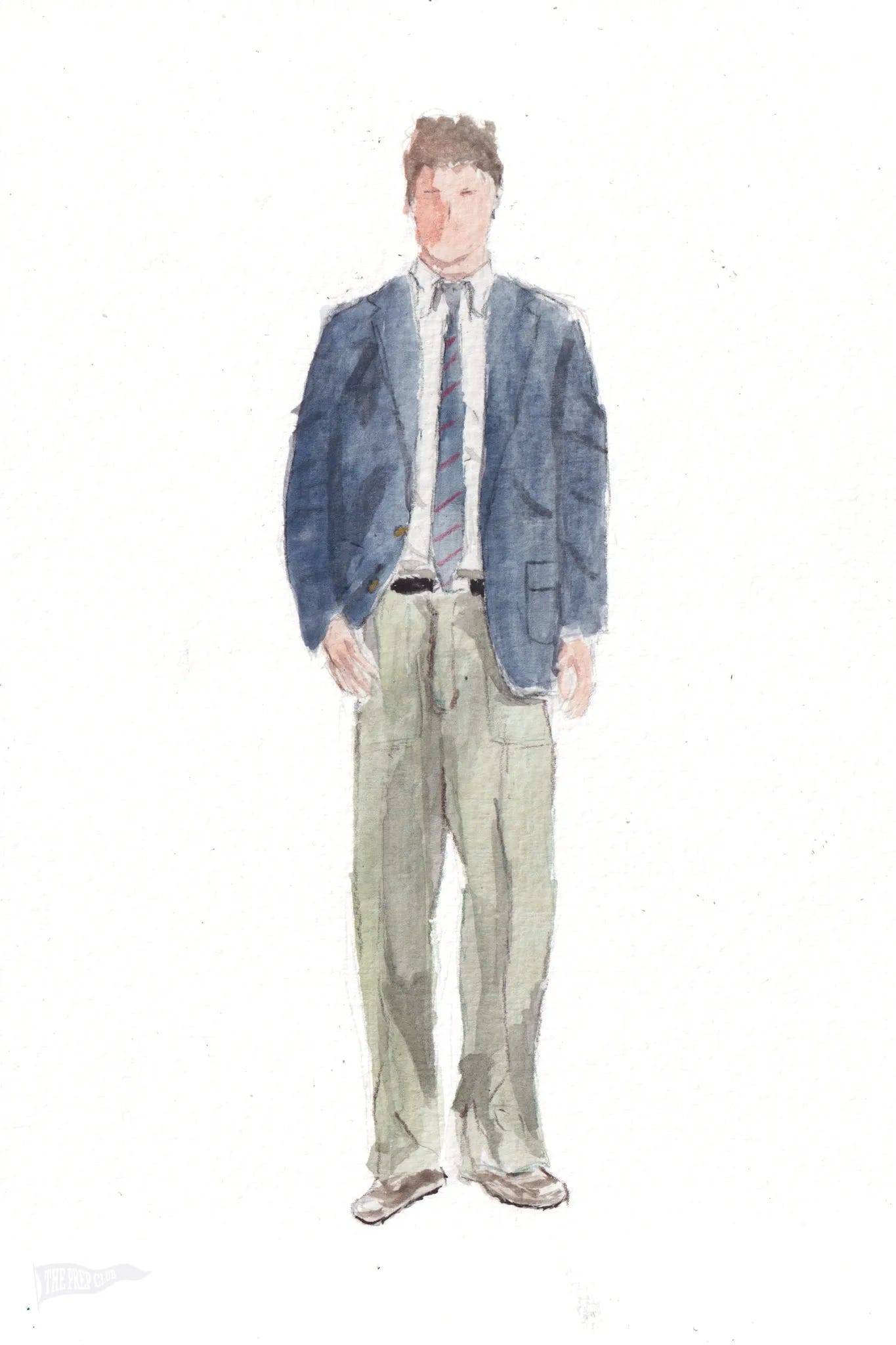
Tension and release is the basis for human pleasure, for food, music, sex, and fashion. When something based in tension gets repeated over and over, seen over and over on social media feeds, it begins to lose its edge; a wire held in tension for a long time will begin to plastically deform. Hold it for long enough and the release may cease to be cathartic.
II. Intentionality
The contemporary menswear landscape, within enthusiast communities that is, is one of sly nods and loud shouts to the effect of teasing the old guard. It feels at times that much of what we do is done in order to piss someone else off. This practice has become widespread far beyond sartorial bounds, to the extent that we have a word for it: “ragebait”.
Fashion online sort of has to be this way. It must grab attention, and there’s no better way to do that than to break the rules, violate some sort of convention. We’re naturally beguiled by scandal. It also naturally provokes discourse, which algorithms simply see as engagement. These are the factors that make ragebait such effective strategy for driving online engagement. Don’t be fooled by the rather strongly put nature of the word either, it’s very possible to engage in ragebait even within fairly civil circles, anything intentionally designed to call attention to itself by way of it’s possibly objectionable and/or divisive nature could be accurately described as ragebait, and outrage can be presented with civility.
I just wonder if this is any way to dress. I’m not a huge fan of the notion of “dressing for oneself”, I have a deep love of the reflexivity and camaraderie that can be found in allowing the people you love and the places you inhabit to impact your love of fashion. However, this feels like an extreme that I can’t condone, it veers dangerously close to worrying about how people think, which is in no way the goal. This is another “it goes both ways scenario”, worrying about whether your outfit might ruffle feathers is no different to worrying about whether people on the internet think you’re cool and both of those are whack.
The other side of internet incongruity is the dread of being labelled as “costumey”. Now, I’ll be the first to admit I throw that moniker around with some liberalness, and I do think it’s something we need to be wary of as we continually over-intellectualise the clothes we put on each day. I just don’t think mashing together codes in this way solves the problem. Instead it creates it’s own self-referential bubble for which it is a costume and for which no-one in the real world knows the references. It’s like if the supporting characters in a film caught a fourth-wall-breaking wink from the lead and questioned them on it. It comes back I suppose to why we dress the way that we do, everything I write about here does, but also who we dress for. The clothes worn by people posting online are crafted for an audience that exists only online and perhaps in certain circles at Pitti or Paris.
A sense of play is vital in engaging with this hobby, just as it is with any other, a musician should improvise twenty minute solos in their bedroom, a painter should put brush to canvas with no vision as if they were a child, a cook must fridge raid on a Sunday night. These sorts of things are the lifeblood of joy, and so I do not wish to snuff them out. But, they must be to that end I think, and not for the sake of causing division, in this case, when there is play and experimentation, it should be for ones own glorious gratification, and, as all forms of pleasure, ought to be be taken in moderation.
Besides, there’s not a whole lot of experimentation going on here, Ralph Lauren has been putting out looks which thrive off this sort of tension for years and years. That too contributes to these looks beginning to feel as though they’ve worn out. Despite being around for a long time, they are too contentious or alternative to be inducted into the hall of fame. Which is where you’ll find the alternative I’d like to posit.
III. The Classics
The brilliant thing about truly classic clothing combinations is that they have no place on social media— I see the irony in that statement, bare with me— they are unremarkable because they are known, and yet therein I think there is a quiet bravery.
These days I’d even go so far as to say it’s rather bold to run a classic completely unperturbed, no sly nod, no aspect of tension, no switching it up. Against a backdrop of personal twists, and modern reimaginings, a truly well-done classic look has a striking capacity to cut through all the noise. It’s just like music, when everyone anticipates discordance and syncopation, sometimes the most impactful choice is to play it dead straight, the creative equivalent of aiming dead centre for a penalty kick.
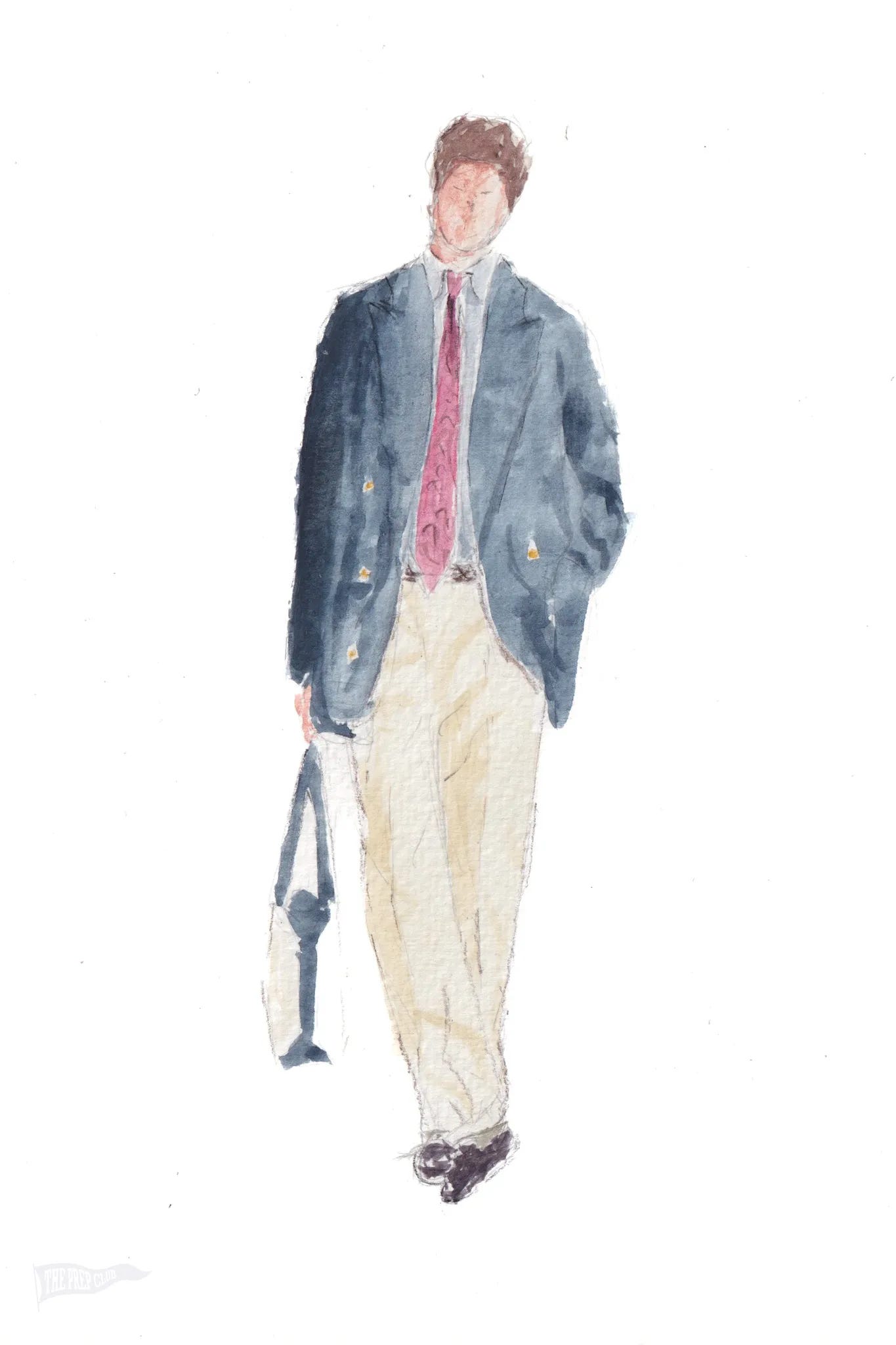
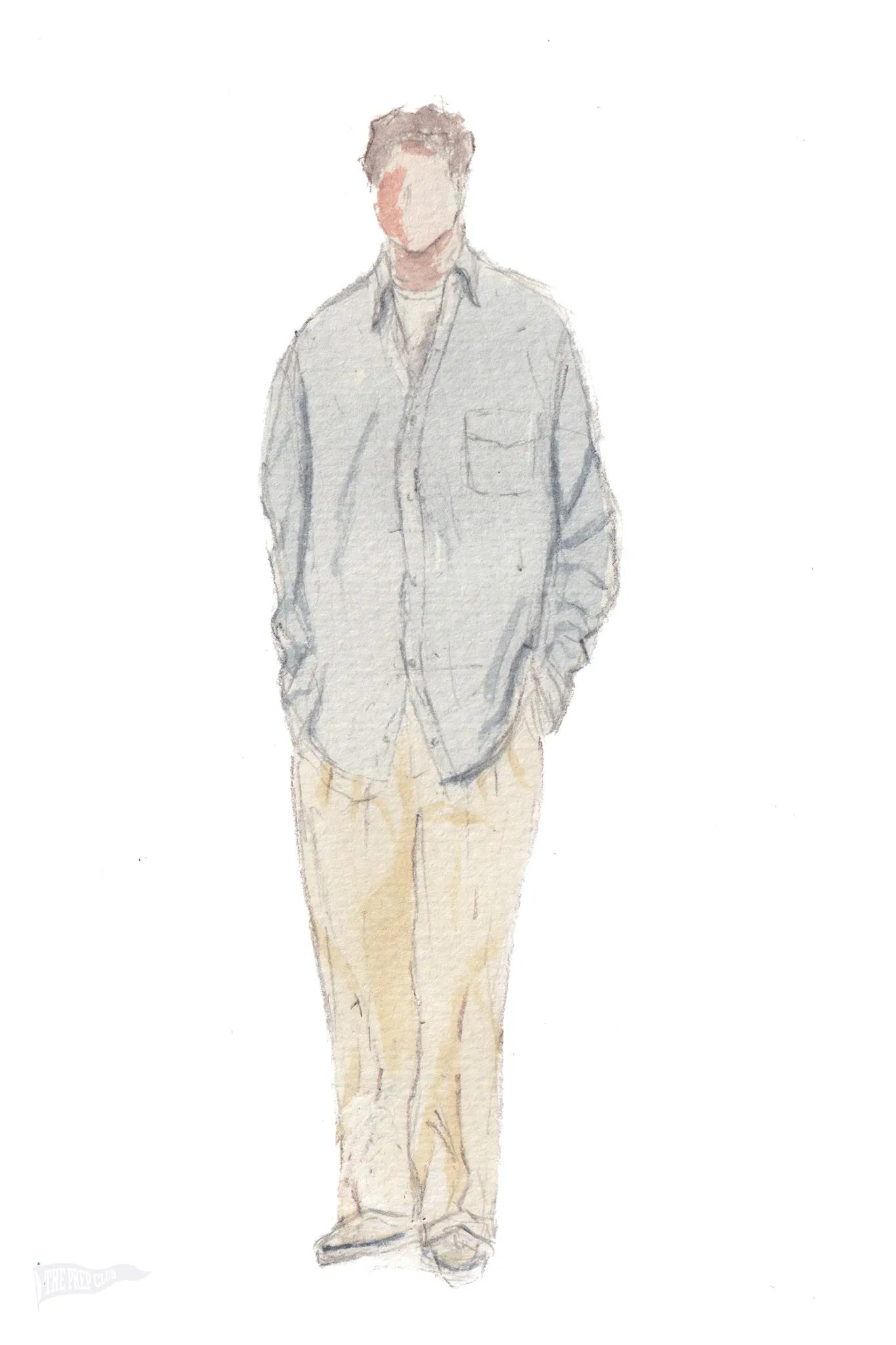
All the while, the classics are classics for a reason, they look great, dude. If you’ve ever wondered about “effortless” style, this might be as close as you can get, there’s naturally some effort required in doing it well, but I figure if you’re here you’re likely to have the details figured out. When you put on that navy blazer with khakis, a blue shirt, loafers and a burgundy tie, the navy jumper with light wash jeans and grey sneakers, the blue OCBD and khakis again but with CVOs, a white tee underneath, and a woven belt, there’s a sort of distinct assuredness, an alleviation of doubt. When you strip away that initial thought process of whether what you’re wearing “goes”, since you know it does, all of the cognisance you wish to give can be invested in fit and detail. All the same, if you’d rather give no further thought you can stride on unshackled from the binds of considering your outfit. It feels fucking GREAT.
IV: Resolution
So I think it comes back around to the idea of a scene, and what it means to be a part of one. Through the twentieth century a scene was dependent upon place, and therefore existed within a specific context and was based around interpersonal engagement. The online “scene” by contrast has none of those things, it is a web of photographs taken in bedrooms and back gardens, shown only ever to those who “get it” and who can end a conversation whenever they wish. Within these contexts we find ourselves in a sort of arms race, with a view to incongruity as innovation. In a way, this isn’t dissimilar to the trend towards free jazz through the sixties, pushing the boundaries in ways that rewrite the rulebook. In that there is certainly some nobility. Then again, there isn’t much ingenuity in consistent juxtaposition of opposing languages, and after a while there’s the risk of the tension simply wearing out the material holding it, as opposed to offering the catharsis of release.
All the while, there is an unignorable joy in playing the hits, in rocking up in a true classic look, and nailing it. There’s a very different kind of freedom, perhaps not a creative one, but a mental one, a liberation from worry. In forgoing experimentation at times we can land on ease, and we’re no less likely to stand out in this day and age. In fact, the comfort afforded by a classic look might aid you in standing out even more. We’re all chasing confidence, assuredness, esteem, and the classics offer those in swathes.
Prep Club adjourned, thanks for coming.

What makes a brand exciting?

Welcome back to THE RADAR, The Prep Club’s fortnightly mini-magazine keeping you in the loop of what’s hip in the sphere of collegiate threads. You can attend last week’s meeting here for our summer dressing philosophy.
Even though the post is thought-provoking, as always:
I live in Berlin. What are the classic styles in Berlin? Definitely, no one here wears a navy blue blazer or sweater draped over their shoulders, and very few people wear Ralph, Tommy, or preppy styles.
Relying on the past isn't enough.
Great post, and not saying that as I’m in the process of writing some posts that cover and delve into some of the points you make.
As well as the lore of heritage menswear styles being catnip for Instagram algos, there I think something particular that happens with that lore in the menswear spaces that doesn’t happen in womenswear